

EPDM Rubber Roof Online Training Centre
Videos and Step by Step Guides
Manuals
-
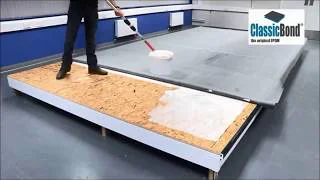
ClassicBond Complete Installation Manual
This Guide is intended as a broad reference aid and is not intended or meant to be all-inclusive
-
Horizontal Drain Outlet
Horizontal Drain Outlet Installation Guide
-
RESITRIX® Official Installation Instruction
These installation instructions provide information about the materials and, in conjunction with the RESITRIX specification guidelines
-
Internal Drain Outlet 68mm
How to install an internal Drain Outlet 68mm
-
Sure Edge® Roof Trim Installation Guide
How to install the Sure Edge trim system
-
ClassicBond Installation Manual Quick Reference
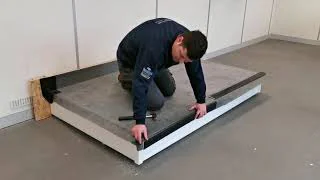
This Manual includes a step by step guide to preparing your flat roof and installing the new rubber roof and trims
-
Installing A Termination Bar (T Bar)
Termination Bar for joining EPDM rubber membrane on to roofing felt or other surfaces
-
Installing Decking Over An EPDM Membrane
Increase your outdoor living space by installing decking over your membrane
-
Installing Walkway Pads
Where heavy traffic is expected we recommend installing walkway pads
-
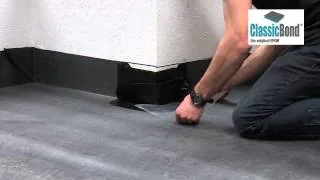
ClassicBond EPDM Internal Corner Forming
How to Form an Internal Corner
-
Resitrix Gutter Lining Installation
This document covers the installation of a gutter lining using the Self Adhesive Membrane
-
Cold Deck Vs Warm Deck
A comparison of EPDM Cold/Warm Deck
-
Wall Trim & Pitched Roof Installation
How to Install a Wall Trim or terminate the rubber membrane under a pitched roof
-
Resitrix External Corner
How to waterproof an external corner
-
Drain Outlets
Installation Guides for Drain Outlets (110mm Top Drain, 68mm Standard Down Pipe Internal Drain, Non standard drains and Horizontal Outlets)
-
Resitrix Internal Corner
How to waterproof an internal corner
-
Resitrix Roof Installation Guide
This document covers, roof preparation, application of FG35 Primer, laying out of membrane and heat welding
-
ClassicBond EPDM External Corner Forming
How to Form an External Corner
-
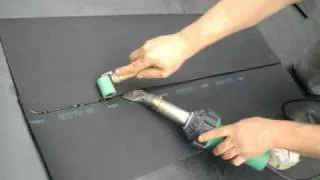
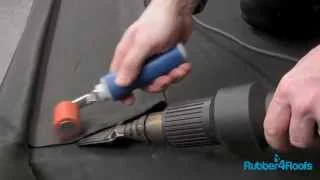
How To Join EPDM Membranes
A properly executed Splice will be as strong as the membrane itself
-
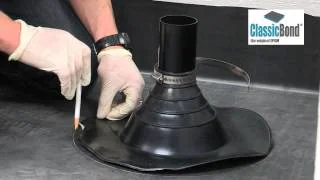
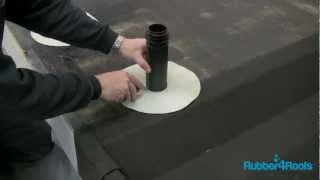
Waterproofing Pipes & Skylights
How to waterproof pipes and skylights etc
-
ClassicBond Pro Installation Manual
ClassicBond Pro Reinforced EPDM Flat Roofing System Installation Guide
-
ClassicBond Pro Brochure
Manufactured by the worlds leading EPDM manufacturer, ClassicBond roof systems offer economical, easy installation and require no special tools or installation equipment
-
ClassicBond BBA Certificate
-
Arboflex BBA Certificate
-
ClassicBond Pro BBA Certificate
-
Resitrix BBA Certificate
-
Skyguard WBA Safety Datasheet
-
Skyguard Liquid Rubber Safety Data Sheet
FAQs
[1] : Can I Install Roof Tiles Over The Rubber Membrane?
Yes you can install EPDM under a pitched tiled roof. This may be necessary on shallow pitched roofs to prevent leaks.
Learn More
[2] : Can Classicbond EPDM Be Laid on Felt?
ClassicBond EPDM rubber in 1.2mm and 1.5mm thicknesses should not be laid directly onto felt, as the two materials are chemically incompatible. Doing so can compromise the performance and durability of the EPDM membrane.
Learn More
[3] : What are the pros and cons of ClassicBond Pro?
With any flat roofing system, there are pros and cons which should be understood before proceeding to purchase. Check out RoofScout's video to find out all of the pros and cons you need to know before choosing ClassicBond Pro for your project
Learn More
[4] : Can EPDM Sheets Be Joined?
Yes, all of our EPDM membranes can be joined. Joining an EPDM membrane can be useful for roofs that are bigger than our largest membrane size or if you find it easier to install the membrane in smaller sections.
Learn More
[5] : Can EPDM Be Laid Over Existing Roof Coverings?
Each EPDM membrane roofing system can be bonded to a range of different surfaces. This article covers the various do's and don'ts for each roofing system, the surfaces that can be bonded to and the adhesives required.
Learn More
[6] : Why Are There Bubbles Or Blisters On My EPDM Rubber Roof?
Whilst bubbles or blisters on a one-piece EPDM roof can be unsightly, they will not cause the rubber membrane to fail. These bubbles of trapped air/moisture can be caused by a variety of issues which are all avoidable if the roof design is correct and the membrane is correctly installed.
Learn More
[7] : Can I Walk On My New Roof?
Yes to an extent. EPDM is designed to take LIGHT foot traffic during installation and for occasional cleaning or maintenance. If you require more use than this, i.e. for a balcony, then there are additional materials that can be laid over your EPDM for a more durable solution.
Learn More
[8] : What Adhesive Do I Use When Bonding ClassicBond Pro EPDM?
ClassicBond Pro EPDM can be bonded with several adhesives: Water-based, Solvent-Based & PU Adhesives, making it a very versatile roofing system
Learn More
[9] : Which Roofing System Is Best For Me?
Each roofing system has unique properties. With five Roofing Systems available; four EPDM Membranes and one Liquid Rubber system, we are bound to have the perfect choice for your roof. Please check out this overview of each to decide which is best for your project.
Learn More
[10] : Do I Need Any Special Tools For My EPDM Roof?
You will typically need a standard 9" roller set, mini roller and brush for applying the adhesives, primers and Arboflex PU. A Seam Roller is another useful tool and is great for tapes and joins for the systems ClassicBond and ClassicBond Pro. The system Resitrix will require a heat gun for joins.
Learn More
[11] : What Should I Do If I Have Incorrect Roof Tiles For The Roof Pitch?
If the pitch of your roof is too shallow for the roof tiles, installing an EPDM rubber membrane can be an excellent solution to this problem.
Learn More
[12] : How Is Natural & Synthetic Rubber Produced?
Today more than 90% of the natural rubber supply comes from South-East Asia. As rubber trees require a hot, damp climate they grow only in the “Rubber Belt,” an equatorial zone that stretches around the world. General purpose synthetic rubber has its origin in two gases: Butadiene which is a by-product of petroleum refining, and Styrene which is captured either in the coking process or as a petroleum refining by-product.
Learn More
[13] : What Is Geo-Textile Underlay & How Is It Used In Relation To Flat Roofing?
The Geotextile underlay can be used on top of the rubber membrane to protect it from sharp objects when it is planned to either ballast (cover) the membrane with pebbles for fire protection.
Learn More
[14] : What Is The Difference Between ClassicBond® & Firestone EPDM?
CLASSICBOND® EPDM is CE marked with a nominal thickness of 1.2mm as opposed to the thinner 1.1mm of Firestone RubberCover as defined by EN 13956
Learn More
[15] : Are The EPDM Membranes Guaranteed?
We are able to offer 20-year EPDM guarantees to all certified installers who have attended our training course.
Learn More
[16] : What's The Biggest Size EPDM Roofing Sheet I Can Buy?
The biggest sheet size available in each system is as follows, all sheets can be joined where the roof size is bigger than the maximum sheet size: ClassicBond 1.2mm - 15.25m x 30.5m (50ft x 100ft). ClassicBond 1.5mm - 15.25m x 15.25m (50ft x 50ft). ClassicBond 2.54mm - 1.52m x 12.20m (5ft x 40ft). RESITRIX 2.50mm - 1M x 10M (3ft 4" x 32ft 10"). Skyguard 1.0mm - 5.0m x 30.5m (16ft x 100ft).
Learn More
[17] : Is ClassicBond Pro BBA Certified?
Yes, ClassicBond Pro EPDM holds the British Board of Agrement certificate, No. 11/4853 (issued to Flex-R Ltd). It also holds fire ratings.
Learn More
[18] : Which Adhesive Is Best For My Roof Deck?
This article will help with choosing the correct adhesive for bonding EPDM to your roof deck
Learn More
[19] : Does It Have To Be Dry For EPDM Roofing To Be Laid?
EPDM Membranes require the substrate to be dry prior to installation.
Learn More
[20] : Is Resitrix BBA Certified?
Yes, Resitrix holds the British Board of Agrément certificate, No. 06/4329 (issued to Carlisle Construction Materials GmbH). It also holds fire ratings.
Learn More
[21] : Is there a right side up when installing ClassicBond EPDM membranes?
You can install a ClassicBond EPDM membrane on either side as this won’t affect the integrity of the product.
Learn More
[22] : Is the ClassicBond membrane available in different colours?
No, the ClassicBond EPDM membrane is only available in a slate grey colour.
Learn More
[23] : Can I install Tiles or Slabs onto an EPDM rubber roof?
Yes, it is possible to install slabs or tiles on top of an EPDM flat roof. There are a couple of options depending on the type of slab or tile you plan to use.
Learn More
[24] : Is the RESITRIX membrane available in different colours?
Yes. The RESITRIX system is available in Black SKW & SK-P and also in the new Grey SR.
Learn More
[25] : Can I install a cement screed on top of EPDM rubber membranes?
Yes! EPDM rubber membranes are not affected by cement or lime additives, making them ideal for waterproofing screed decks.
Learn More
[26] : How thick are EPDM membranes?
We sell a total of five roofing systems. Four are EPDM membranes and the fifth is a Polyurathane Liquid. The thicknesses are listed below:
- ClassicBond
1.2mm (Standard)
1.5mm (Premium) - RESITRIX
2.5mm - ClassicBond Pro
2.54mm - Skyguard
1.0mm
[27] : Is Classicbond EPDM BBA Certified?
Yes, ClassicBond membrane holds the British Board of Agrément certificate, No. 11/4853 (issued to Flex-R Ltd). It also holds fire ratings for each of the thicknesses available.
Learn More
[28] : Why do we charge delivery?
We offer 100% honest and transparent pricing. Unlike other companies who hide the cost of delivery in their products, we want our customers to know exactly what they are paying for.
Learn More
[29] : When was rubber first used for roofing?
The first commercial rubber roof was installed in the United States in 1965 by Carlisle Syntec. It is now 50 years old and still going strong. This makes ClassicBond the only EPDM with a proven 50-year life expectancy!
Learn More